

'Inexplicable' decision blamed for high-speed train crash in central Spain that killed dozens
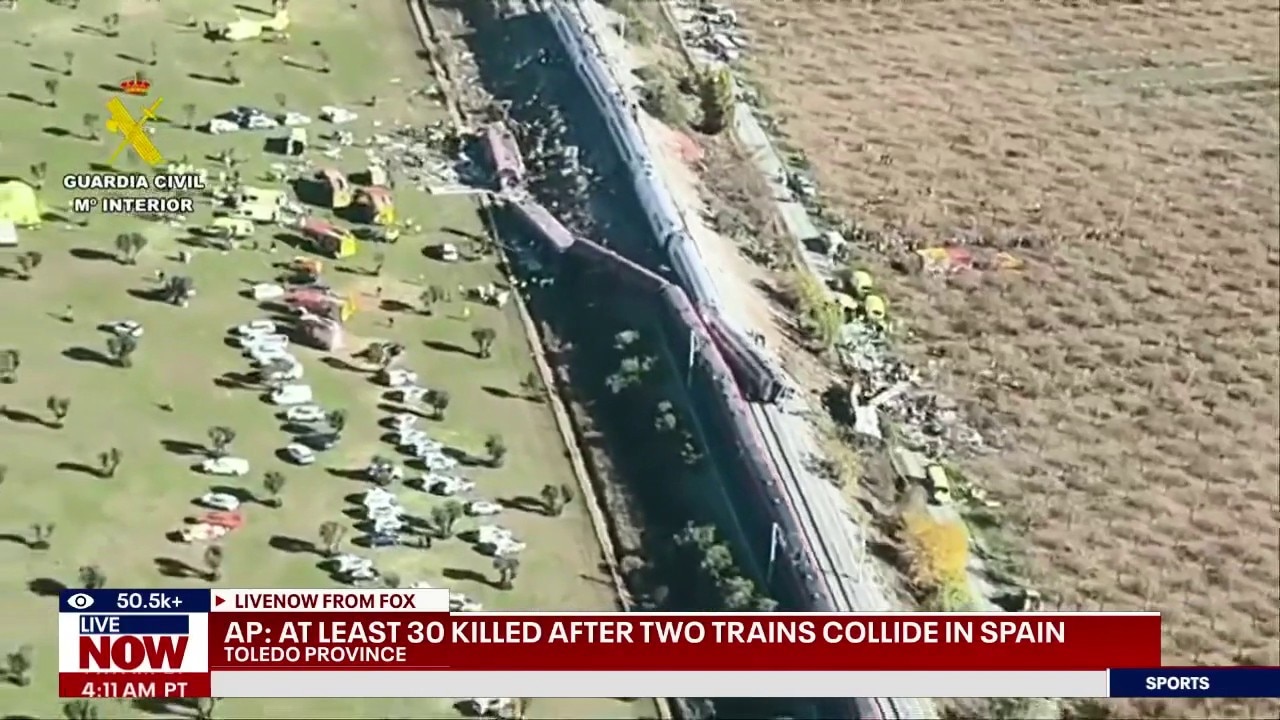
At least 30 killed in Spain high-speed train collision
At least 30 people were killed when two high-speed trains collided in Spain on Wednesday, the second deadly accident in less than a year on the line connecting Madrid to the southern Andalusia region, regional authorities said.
Spain's transportation minister placed blame on a crash of two high-speed trains that killed at least 64 people on a decision made by a central command center, adding the train engineers were not to blame.
What we know:
Transport Minister Óscar Puente said a computer malfunction caused the security system on a 39-mile stretch of track to stop working. That stoppage caused all trains on that stretch to stop running, he said.
But the central command told the state-owned RENFE company, which operated one of the two trains involved, to start running again without any speed restrictions, the Associated Press reported.
The RENFE train struck the rear of the other train, operated by private company IRYO, that was still stopped, authorities said.
The country’s central government office for Castilla La Mancha confirmed the death toll, adding at least 80 people were injured as rescue efforts continue to search for additional survivors and bodies, according to the regional president of Castilla La Mancha, Emiliano García-Page.
Spain said the crash happened Wednesday morning in the province of Toledo.
Authorities later said the RENFE train carried 397 passengers while the IRYO train carried 147.
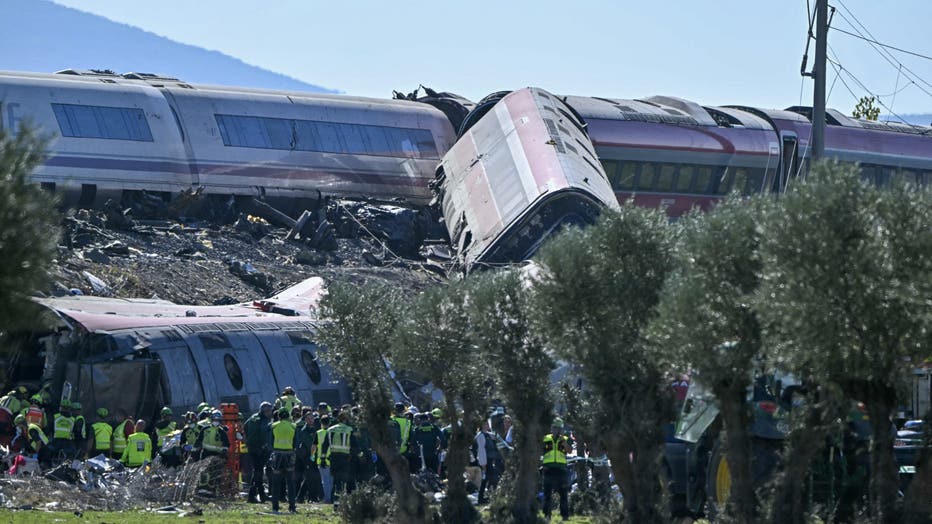
Emergency services work at the site of a train crash between a high speed Renfe AVE train and Iryo train around 150kms south of Madrid between Urda and Los Yebenes in the province of Toledo, on October 28, 2026. (Photo by Javier SORIANO / AFP via Get
Esther Padilla, spokesperson for the Castilla La Mancha region, said both trains were coming from Madrid heading to Seville in southwestern Spain. The crash caused both cars to derail.
What we don't know:
Authorities were still working to determine how fast the train was going, but estimated it could have been moving as fast as 200 kph, or 124 mph at the time of the collision.
Puente said the train should never have been told to start moving again since a "stop signal" was still active. It is not clear why the train was instructed to proceed. At the very least, he said, if it such an instruction had been given, it should have been to go at a reduced speed.
"I am not attributing responsibility to anyone, I am just stating the facts," he said.
The Source: This story was written with information provided by The Associated Press. This story was reported from Orlando.